

I Like Different People
It's all in the conversation, isn't it?

As a journalist, I am basically a fanzine writer. Always was, always will be. What that means is that I’ve always been driven by my own desires rather than waiting for an assignment from some editor. I’ve always chased, retrieved, amassed and written up stories based on my own whims and interests – fairly indifferent as to whether any magazine, newspaper or website would eventually take the piece in question. Somehow it’s always worked out, and I cherish that independent spirit. The safety of being employed by a magazine would probably have made greater financial sense, but there’s certainly something to be said for the actual freedom of freelancers.
I like people who think, feel and will things. And who then create art based on that existential bedrock trio. I know it’s an extremely vague and worn-out word, but “passion” can be both endearing and inspiring – even if you’re not really super interested in what a certain person is doing. The mere force of passion can definitely be good enough for a great story.
In 2007, I anthologized some interviews in a Swedish book called Olika Människor (that’s right: “Different People”). It was suggested by an underground publisher, and I thought it was interesting to see how these pieces (basically written between 2000 and 2007) would work as a whole.
The book didn’t really do that well. Sweden is, after all, a very small country, and most of the people I like to talk to are under the radar of norm-core reality. I was, however, happy about the fact that many younger journalists liked the book, and found my attitude of allowing people to truly talk engaging and refreshing. Being a journalism college dropout myself, I knew exactly what they meant. I absolutely hated the taught formality of standardized journalism, and decided, at age 23, to just carry on with my own approach, no matter what. I have never regretted that decision.
Returning to this specific material in 2021, I can see it all from a better and wider bird’s eye view. When you put loose ends together, you can sometimes see a pattern emerging, and you can – hopefully – tie all these ends up. Are the voices too disparate? Perhaps, but then so is every day of our lives. Are the voices too desperate? Perhaps, but then that just makes them create great things. Are they representing something homogenous? I hope not.
There is one thing that unites them, though: these people create culture, whether we like that culture or not. Personally I do like it, because once upon a time I made it clear that I did want to talk to these very different people. As many current affairs aspects of these talks are already long gone, what remains is hopefully some kind of psychological, intuitive insight into creative minds that experience trials and tribulations just like you and me. Perhaps not of exactly the same nature or essence, but trials and tribulations none the less.
Creators of culture often have a quite problematic relationship with themselves and the inherent aspects of creativity: compensation, narcissism, solipsism, bitterness, etc. It seems to be part of the psychological make-up of most creatives to feel a strong need to be acknowledged. I’m not here to specifically analyze why this is in each specific case, but I am certainly here to acknowledge and appreciate these creatives and their work, as they were and as it was. Whatever is needed to keep them going is all fine by me.
I already more or less knew what these people wanted to say – sometimes even before the meetings and actual conversations. But to see beyond the predictable, and keep asking “why” and “why not” is still my job after some 35 years of talking to creative people. This anthology reflects a mere portion, a segment, a piece of the pie of curiosity that will hopefully remain after we’ve gobbled it all up.
This book is very different from the Swedish test pilot edition of 2007. Not only because I’ve added several more interviews (running up until 2011, basically) but also because I’ve contextualized them through myself; through my own voice. I didn’t want to simply display a collection of talks, but rather to tell a story of why all of this happened. Because that makes more sense in that better bird’s eye view I mentioned. Seen from this perspective, I have orchestrated the voices rather than merely presented them. The anthology has now become a choral work, if you will, celebrating heterogeneity, integrity and creativity as such.
Does this choral composition sound harmonious enough? Well, that’s not really for me to judge, is it?
Carl Abrahamsson, Stockholm, February 2021
To check out the Different People book, please go here.
(Some of the interviews in the book are available to paid subscribers here at the site.)
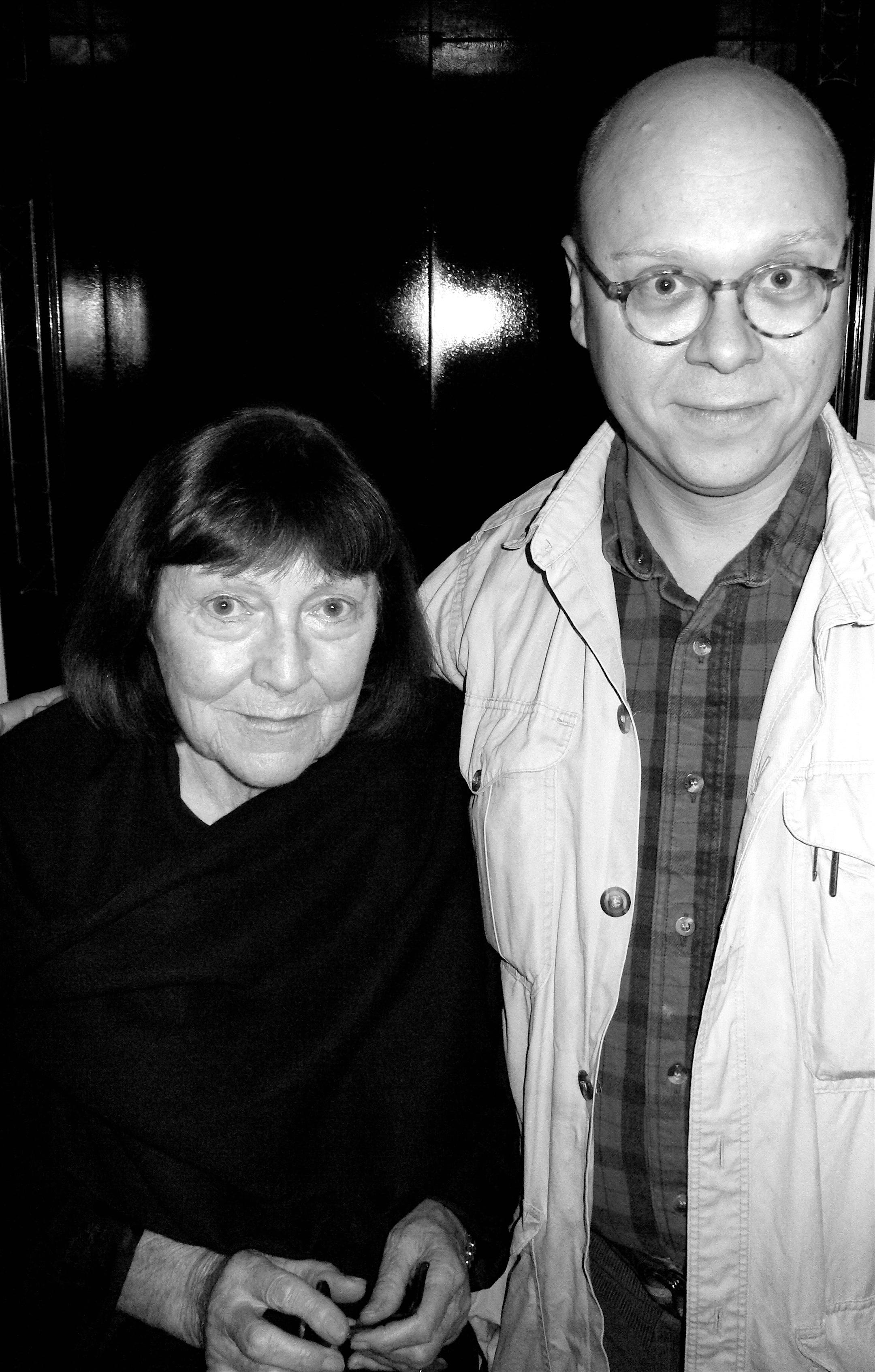
Photo of me and June Newton, Los Angeles 2007, by Peter Bisley.

