

On Screen Paranoia
How about some great weekend unease?

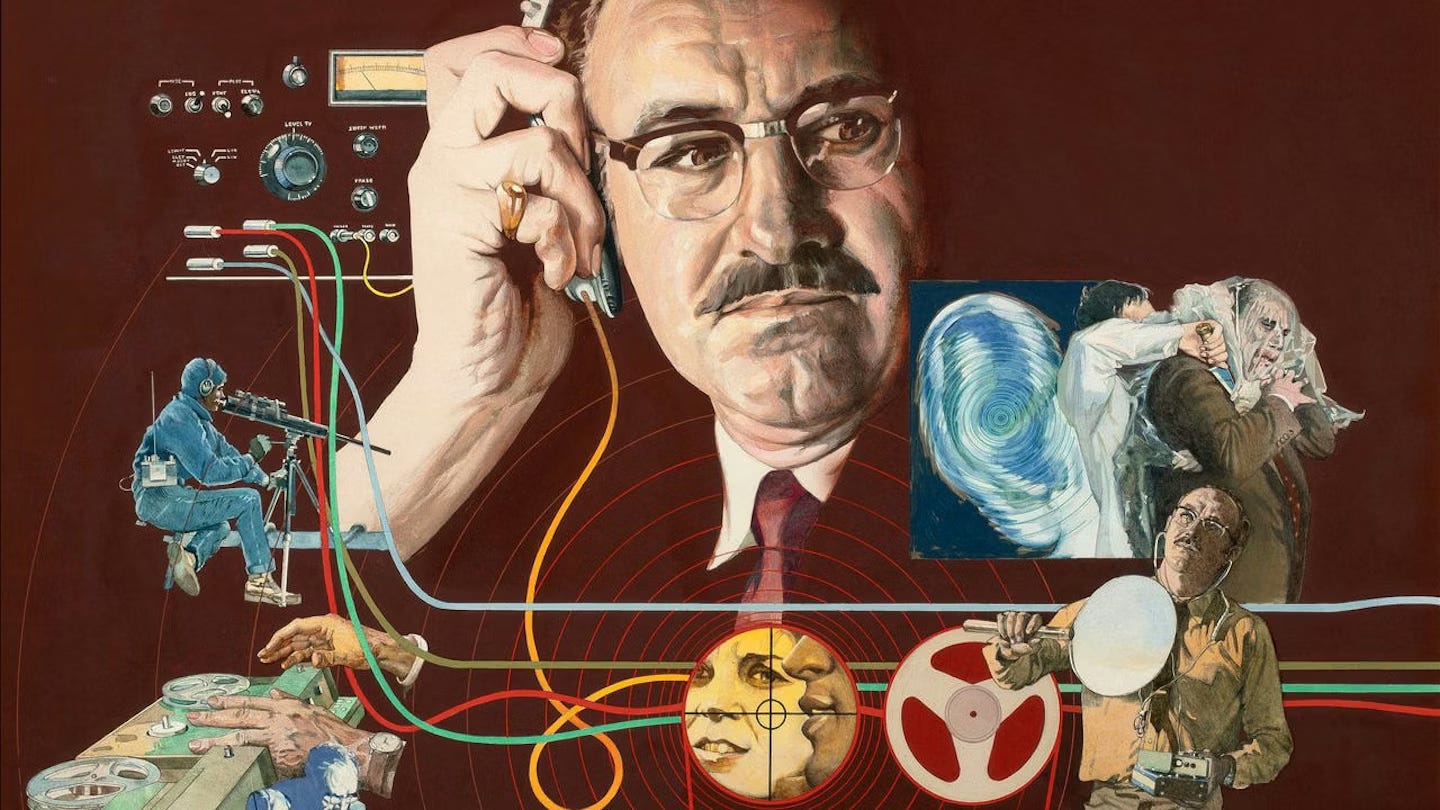
There are many ways cinema can make us afraid. A shark will do it. A slasher. So will a demon, a plague, an investment banker with perfect teeth, or a Baz Luhrman musical. But really paranoid cinema offers a more refined unease: the suspicion that power is organized, faceless, patient—and perhaps already in the room—perhaps even watching you through the screen?
Films about government and political control are rarely just “political.” They are also about paperwork, obedience, surveillance, memory, language, and that ancient human fear that somewhere, someone has made a file about us for later scrutiny. What makes these movies endure is not simply that they show oppressive systems, but that they understand a subtler truth: domination is most effective when it becomes atmosphere.
Here, then, are five films from different eras that dramatize paranoia about political power with style, intelligence, and varying levels of psychic damage. Enjoy (?)!
1. The Conversation (1974, dir. Francis Ford Coppola)
Harry Caul, a surveillance expert in San Francisco, is very good at recording other people’s lives and very bad at living his own. Hired to tape a young couple’s conversation in a crowded public square, he becomes obsessed with a fragment he may have misheard—or heard too well. As he revisits the recording, his technical professionalism curdles into moral panic. What exactly is going to happen to the couple, and what role has he played in it? The story tightens not through explosions but through repetition, doubt, and the terrible intimacy of listening.
Why it belongs here: this is one of the great films about surveillance before the digital age made surveillance seem efficient, sleek, or… gasp… inevitable. The Conversation understands that the real horror is interpretive: once everything can be recorded, every inflection becomes a trap. The apparatus of political and corporate power is mostly offscreen, which makes it more frightening. We do not confront Leviathan directly; we hear it in the static.
Want to check out The Conversation?
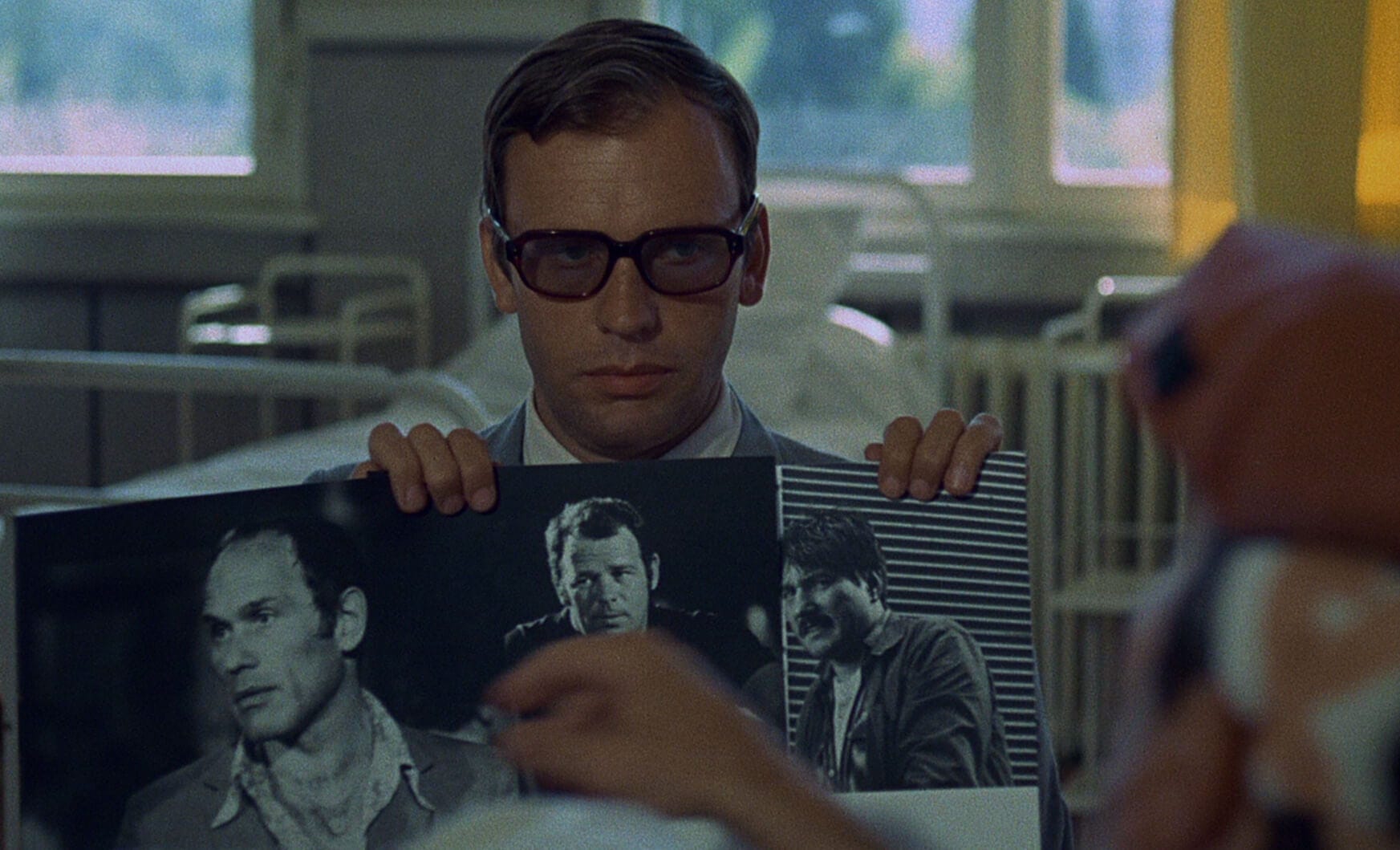
2. Z (1969, dir. Costa-Gavras)
In an unnamed Mediterranean country that resembles Greece a little too closely to be accidental, a charismatic left-wing politician is assassinated after a public rally. Authorities immediately begin the usual dance of official nonsense, blaming drunkenness, confusion, and essentially the weather. But an investigating magistrate starts following the evidence, and the evidence, being impolite, keeps pointing toward a coordinated conspiracy involving the military, the police, and the state’s loyal hooligans. The film proceeds with the speed of a thriller and the indignation of a civic document.
Why it belongs here: Z is paranoia cinema with conviction & receipts. Rather than merely implying that shadowy forces manipulate democracy, it shows how respectable institutions collaborate in broad daylight while preserving the fiction of legality. Its brilliance lies in how little mysticism it allows power. The conspiracy is not exotic; it is bureaucratic, cowardly, and procedural. That may be the most unnerving version of all.
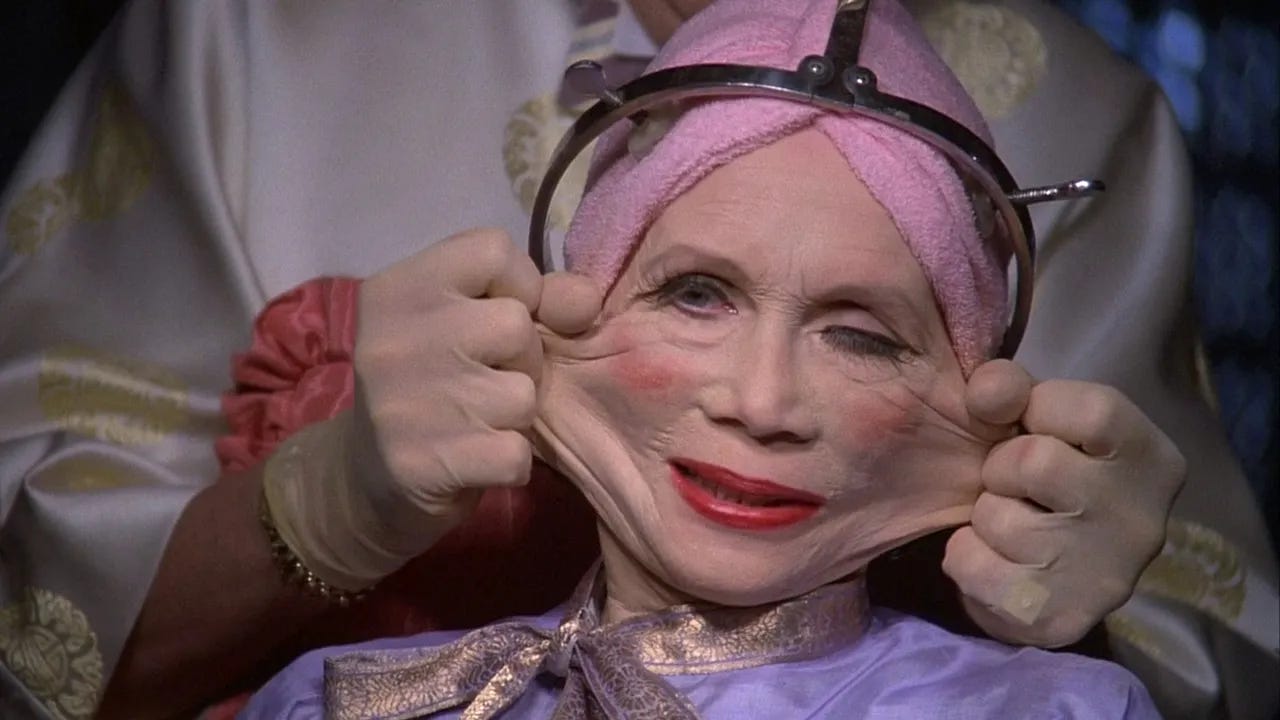
3. Brazil (1985, dir. Terry Gilliam)
Sam Lowry is a low-ranking bureaucrat in a retro-futurist state whose administrative machinery has achieved the sublime: it can transform a typo into a life-destroying event. When a harmless man is arrested because of a clerical error, Sam stumbles into a labyrinth of paperwork, security services, plastic surgery, ducts, forms, receipts, and institutional madness. There is, somewhere amid the cables and stamped documents, a woman he believes he loves; there is also the distinct possibility that modern governance has become one enormous self-propelling hallucination.
Why it belongs here: if Kafka had been handed a bigger art department and a taste for industrial slapstick, he might have made something like Brazil. The film’s political paranoia is comic, but not frivolous. It captures a central feature of control societies: they do not merely repress; they administrate. People disappear not because Big Brother is always glaring, but because systems become too intricate, too absurd, and too insulated to correct themselves. Terror arrives wrapped in office memo formatting.
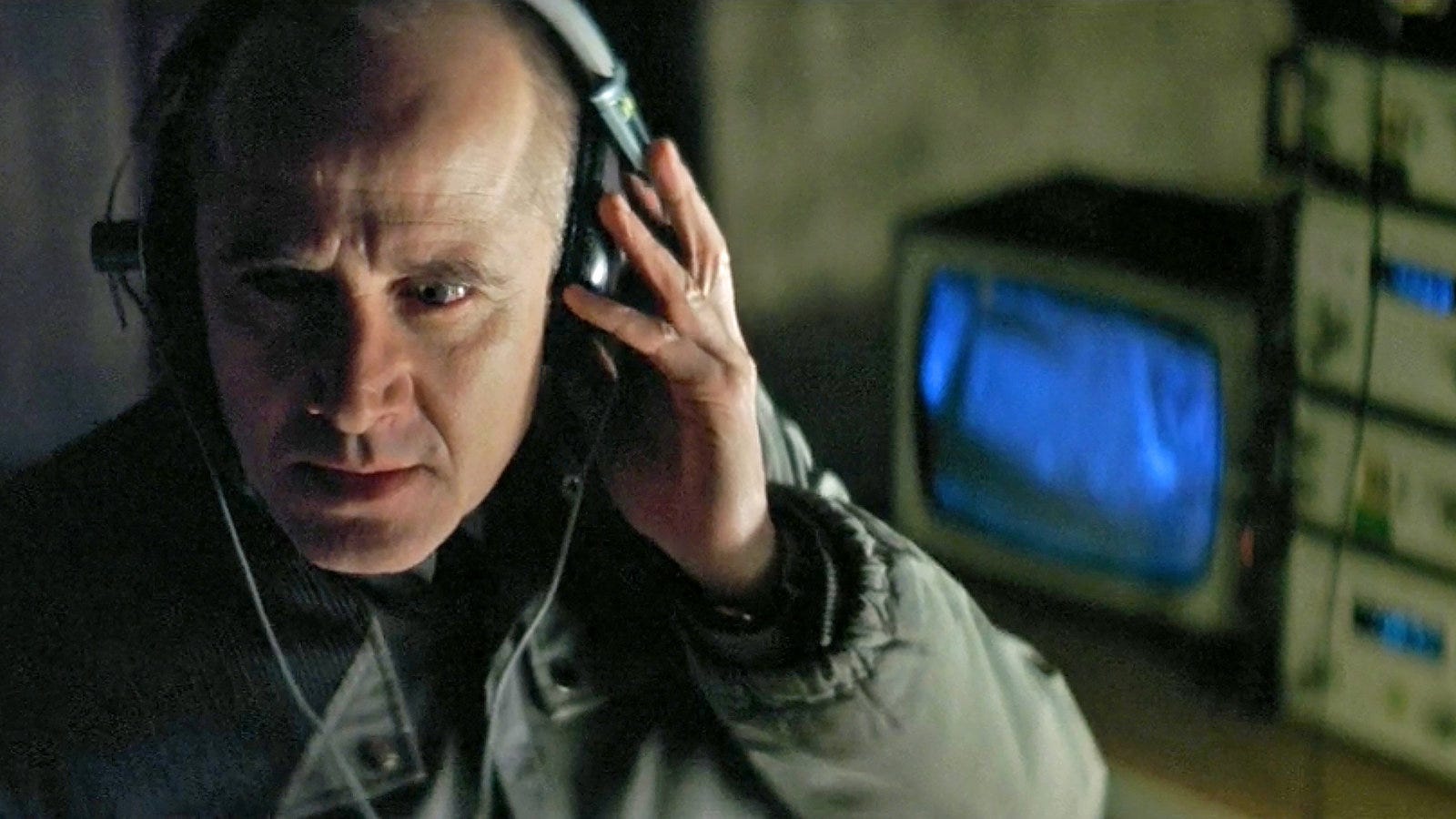
4. The Lives of Others (2006, dir. Florian Henckel von Donnersmarck)
Set in East Berlin in the 1980s, the film follows Gerd Wiesler, a disciplined Stasi officer assigned to monitor a playwright and his actress partner. At first, his task seems straightforward: listen, report, preserve ideological order. But constant exposure to the couple’s private life begins to alter him. The machinery of surveillance, intended to erase ambiguity, instead produces it. Meanwhile, the state’s motives prove less noble than merely jealous, punitive, and self-serving.
Why it belongs here: this film is relevant because it shows political control not as an abstract doctrine but as a daily practice of intrusion. Walls have ears, yes, but those ears belong to tired men with headphones, ambitions, resentments, and occasional consciences. The Lives of Others is especially sharp on the intimacy of authoritarianism: the state does not only regulate speech in public squares; it colonizes bedrooms, manuscripts, friendships, and silence itself.
Want to check out The Lives of Others?
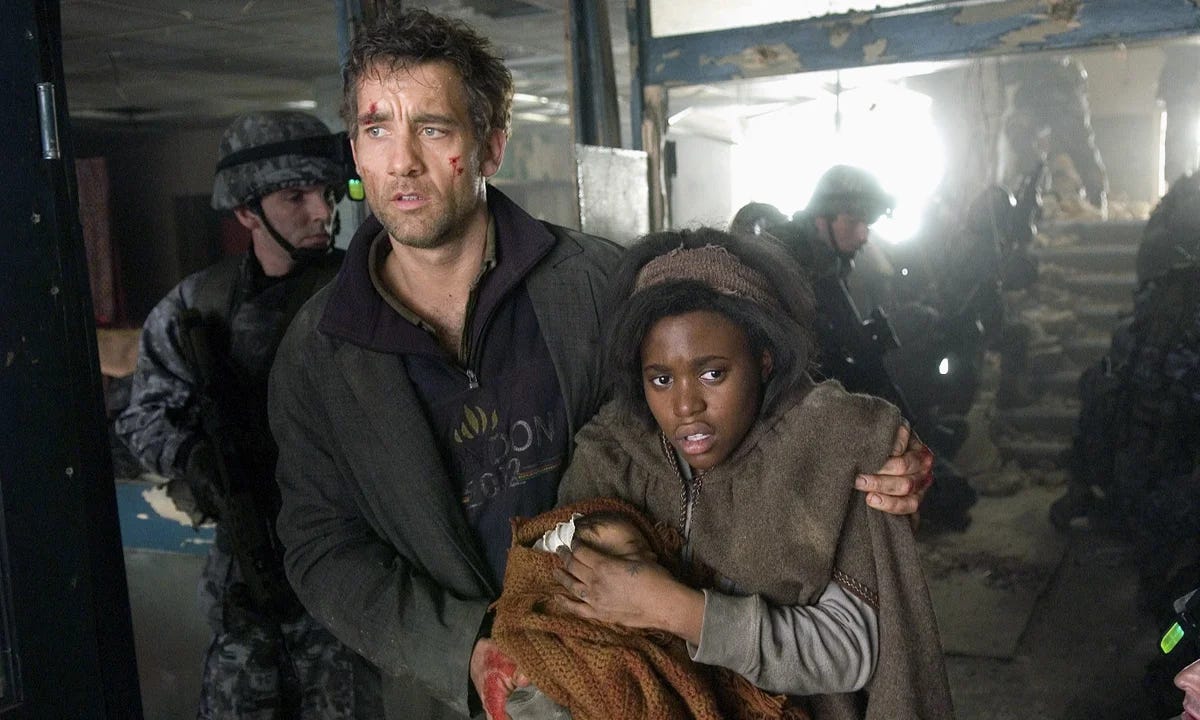
5. Children of Men (2006, dir. Alfonso Cuarón)
In a near-future Britain, humanity has become infertile, and society has responded to civilizational despair not with wisdom but with militarized border policy. Theo, a disillusioned former activist, is pulled into a mission to protect a miraculously pregnant refugee woman. Their journey through checkpoints, propaganda, refugee cages, urban warfare, and collapsing institutions becomes both chase film and political lament. The plot moves with urgency, but the world around it tells the deeper story: a frightened state has converted emergency into permanent method.
Why it belongs here: although it is often discussed as dystopian science fiction, Children of Men is also one of the most persuasive modern films about government control justified by crisis. Its paranoid force comes from plausibility. The state does not announce itself as evil; it presents itself as necessary, temporary, regrettable—while normalizing brutality. The lesson is ancient and renewable: exceptional measures have a genius for becoming banal routine.
Want to check out Children of Men?
What unites these five films is not just suspicion of government, but suspicion of systems that claim necessity as their alibi. Some are overtly authoritarian, some are democratic in name, some are exaggerated into satire, and some are realistic enough to consider keeping your phone in the basement. Yet all of them understand that political control is not only exercised through force. It is exercised through records, classifications, euphemisms, technologies, and the dull, technocratic management of what may be seen, heard, or believed.
Paranoia is therefore not merely a psychological condition. It is a form of literacy. One learns to read the memo, the transcript, the official explanation, the missing document, the cheerful slogan. One learns, in short, that power prefers not to look like power. It prefers to look like bureaucratic procedure.
Which is perhaps why these movies remain so enjoyable, even when they are bleak. They flatter us with a grim invitation: pay attention, they say. The plot is always larger than the plot. And if, after watching them, you feel a sudden reluctance to speak near telephones, elevators, or men carrying clipboards, cinema has done its old magical & miraculous work.


Hackman is my all time favorite actor, and Copola is in my top five favorite directors. The last images of The Conversation are truly some of the most haunting I've witnessed, like those dreams about smashing your alarm clock to bits but it still sounding off like a siren.
Still holds up, too. A brilliant study in Robert Anton Wilson's srtong suspicion about the self fulfilling prophecy of paranoia.
Great reflection, Carl. Thanks.